Names on the buses
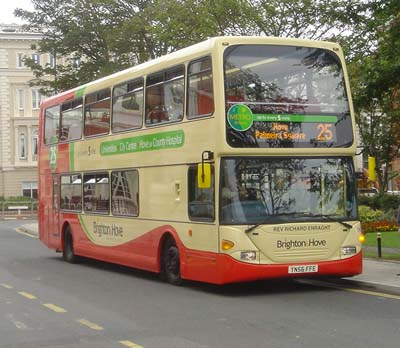
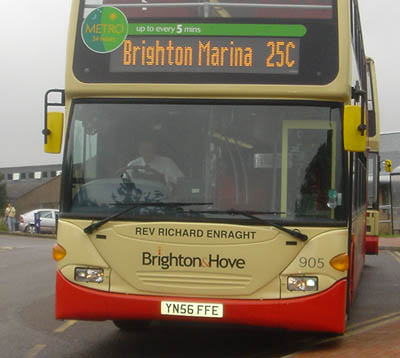
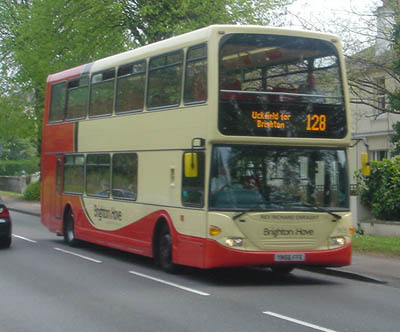
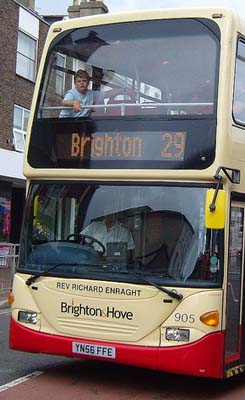
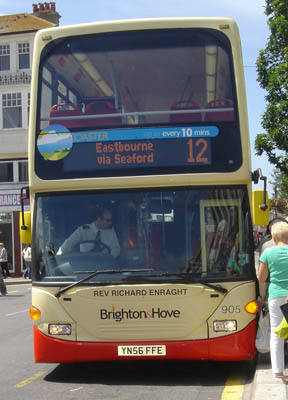
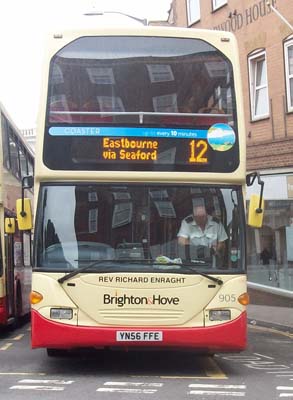
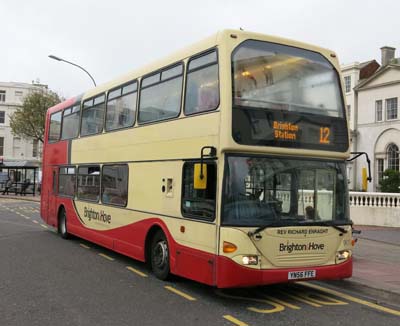
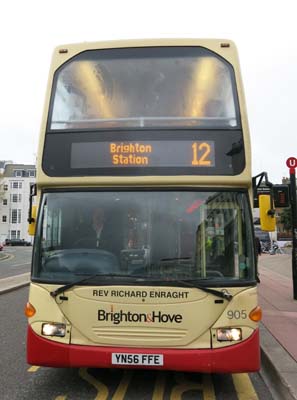
905 Rev Richard Enraght
764 Rev Richard Enraght
905 Rev Richard Enraght
764 Rev Richard Enraght
Names on the buses
Connections with Brighton and Hove :
1837 - 1898
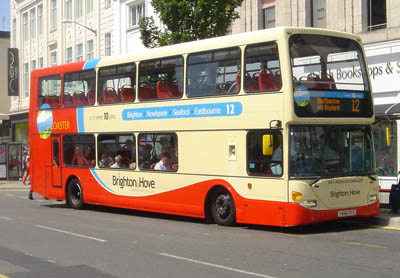
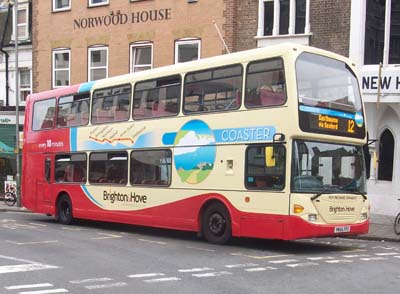
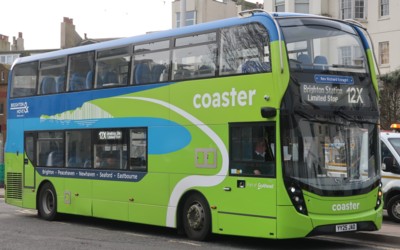
905 Scania Omnidekka - carried name since delivery in September 2006 in Metro 25 livery. Metro 25 branding removed April 2007 and re-applied in September 2007. Changed to Coaster livery in June 2008. Repainted into revised Coaster livery August 2011. Coaster branding removed November 2014. Bus transferred to Go South Coast August 2019. Name reappeared on 764 ADL Enviro400 in December 2025.
Father Richard Enraght was a Church of England priest in the 1800s. He was born in Ireland in 1837. He worked as a Curate to Father Arthur Wagner at St Paul's in Brighton from 1867. He then became Curate in Charge of St Andrew's Church, Portslade with St Helen's Church, Hangleton until 1874.
Father Enraght was active in promoting the return of lost English Catholic practices to the Church of England. During the 1800s, the Anglican Church in Brighton was heavily influenced by the 'Oxford Movement'. Centred at the University of Oxford, the movement argued for the reinstatement of Catholic practices within the Church of England. This included the ritualistic use of wafer bread and making the sign of the Cross during Holy Communion. It was most prevalent in cities like London and Brighton. This led to the nickname 'London, Brighton and South Coast Religion'. The atmosphere in Brighton was very hostile. The Brighton Gazette was highly vitriolic towards any clergy that introduced lost English Catholic practices into their churches. The Disraeli Government, with the backing of senior bishops, decided to crush ritualism in the Church of England. They passed the Public Worship Regulation Act in 1874.
The Church Association, an evangelical Anglican organisation, prosecuted him under the new Act. After initially refusing to attend his trial, he was sentenced to 49 days in Warwick Prison between 1880 and 1881. His absence from trial cost him his living. He was evicted from his vicarage along with his wife Dorothea and six young children. After his release, he served in east London for nine years, before his final Parish in Bintree, Norfolk.