Names on the buses
751 Louisa Martindale
751 Louisa Martindale
Names on the buses
Connections with Brighton and Hove : 1839 - 1914 Louisa Martindale, not to be confused with her doctor daughter of the same name, was born Louisa Spicer in Essex. After being widowed with two young daughters, she moved to Lewes then to Brighton. She was a believer in education for girls, and in Brighton, her daughters could access the pioneering Brighton High School for Girls; one of the few schools to put girls' education on an equal footing with boys. Locally, Louisa became a driving force for equality for women. She became a prominent member of Brighton's Women's Co-operative Guild and co-founded the Women's Liberal Society. She supported the National Union of Women's Suffrage Societies on whose executive committee she served and argued extensively for equal pay. She also argued the right of women to choose whether they left their occupation when they married, instead of being forced to do so. As a champion of young, working-class women, her home in Brighton became a hub for young women to learn about politics. It was here where the young shop assistant, Margaret Bondfield, was nurtured and encouraged to develop her political ideas. Margaret went on to became Britain's first cabinet minister. Louisa helped to set up the Lewes Road Dispensary for Women and Children too. Here, working-class women and children who didn't have the funds to pay for medical treatment could access doctors. One of her daughters was Dr Louisa Martindale, Brighton's first female GP. Her younger daughter, Hilda Martindale, had a successful career as a Factory Inspector. Hilda joined the Treasury in 1933, one of the first women to reach the higher levels of the Civil Service. In 1902, Louisa moved to Horsted Keynes and set up a congregational church and centre, now known as the Martindale Centre.
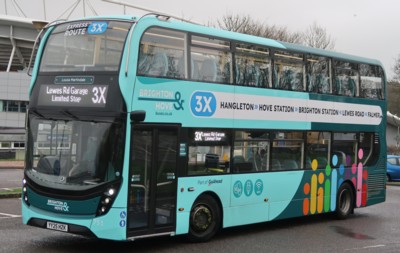

751 ADL Enviro400 - carried name since December 2025.